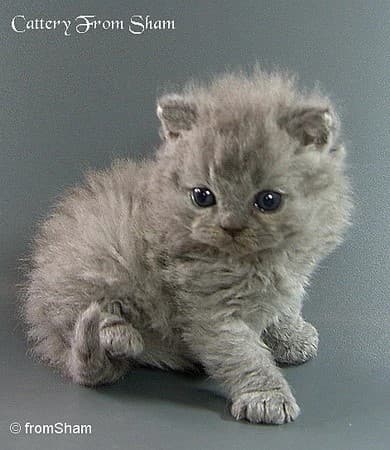
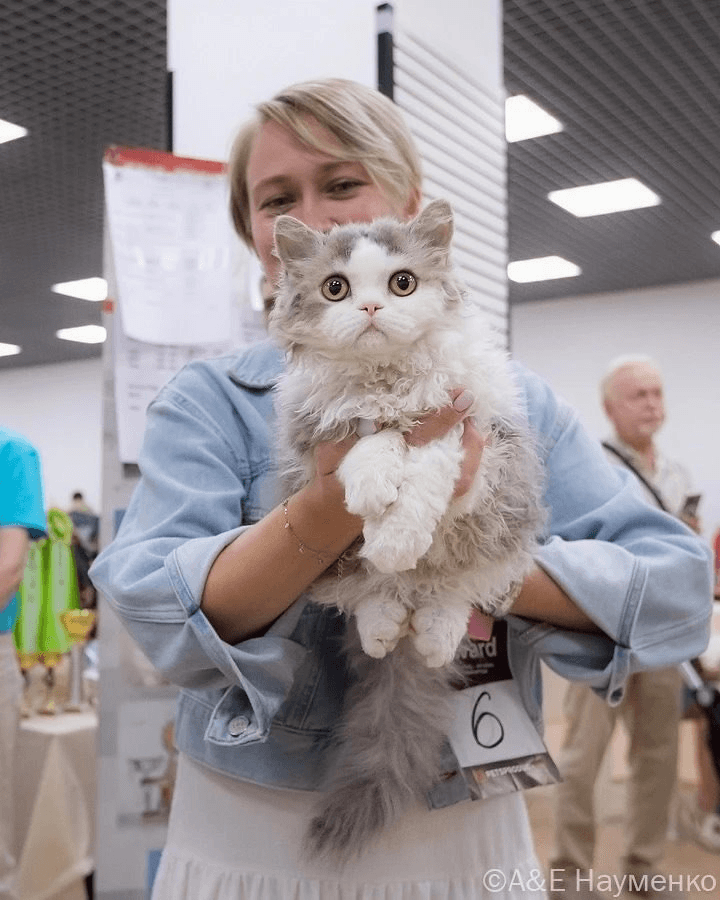
When I wrote about the sort of person who might suit a Selkirk Rex, I tried to picture that person. Now I shall try to do the same for a Devon.
The first thought that comes to mind is this: once a Devon enters your life, very soon there is a great deal of Devon in it.
My first Devon Rex was Yasya — Baltic Elf Yasmin. I reserved her when she was still so small that it was impossible to know what she would become. It was her colour that caught me.
I have always loved calico cats: blue-cream, lilac-cream and black torties with white. They are my weakness. Yasya was simply irresistible — covered in splashes of different colours, bright and striking, the only one like her in the litter. I saw her and that was that.
When she finally arrived, our first proper meeting took place in the car. Yasya soon made it clear that spending the entire journey in a carrier was not part of her plan, so I had to open it.
She played for a while, settled on my lap and fell asleep, completely relaxed. I touched her ears, paws and nose and studied my new kitten, and she did not even consider it sufficient reason to wake up. She simply slept on a complete stranger as if we had travelled together all our lives.
At home, something else amazed me: Yasya did not walk across the room — she fluttered. Light, bright, colourful, almost tropical. I soon began to call her my little hummingbird from paradise.
Then Obi-Wan joined me, and he was entirely different: a larger, more substantial cat, with a very different character. If Yasya was my hummingbird, Obi-Wan was pure sugar.
He is the sort of cat you can lie and cuddle with. He settles beside you, lies across your shoulder, sleeps near you and quite naturally treats a person as his personal hot-water bottle.
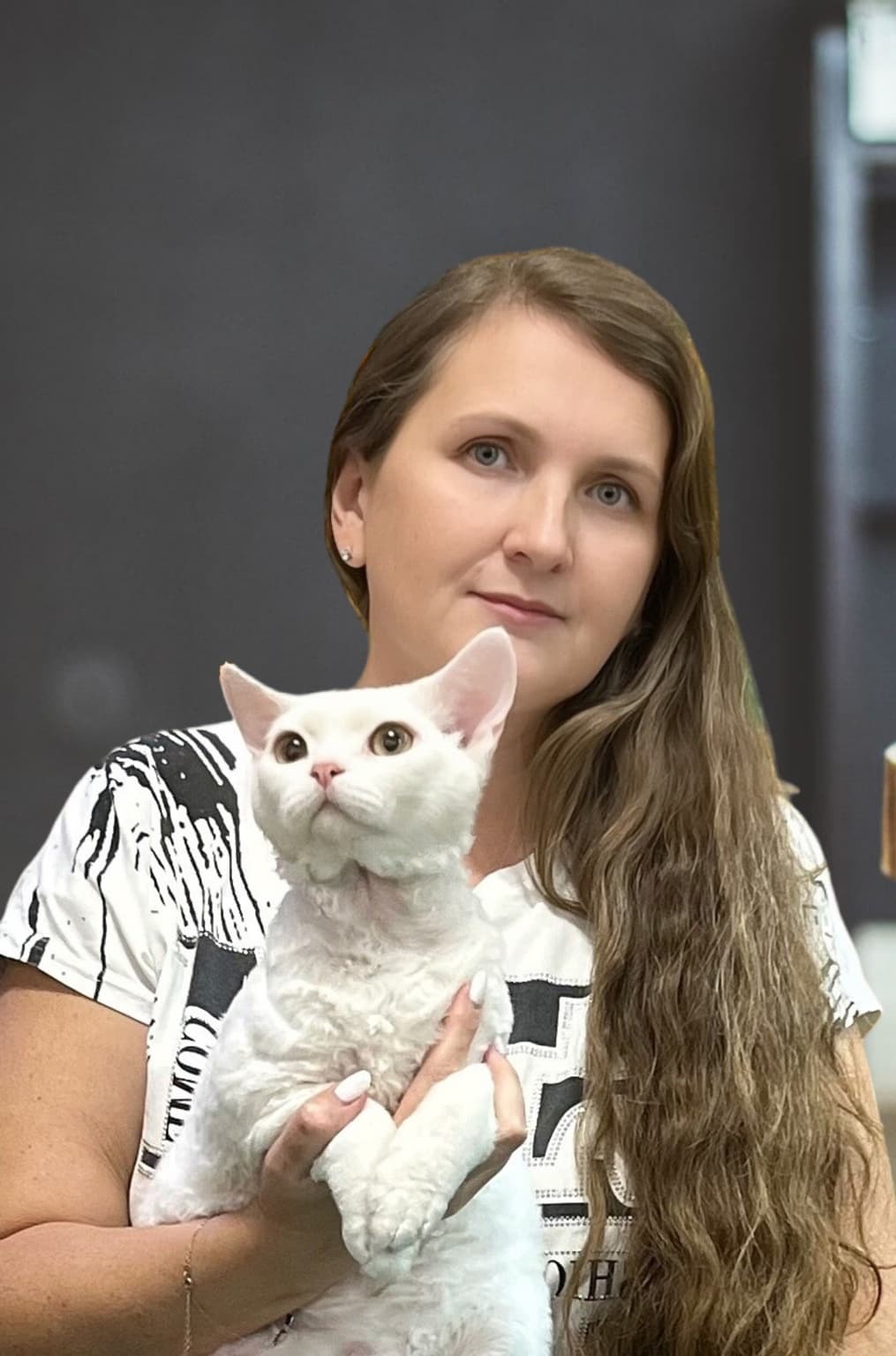
Over time I had more Devons. Luna arrived, kittens were born and I kept some of them. Every character is different: some are more cautious, others utterly fearless; some enjoy sitting in your arms, while others dislike being picked up and carried somewhere they did not choose to go.
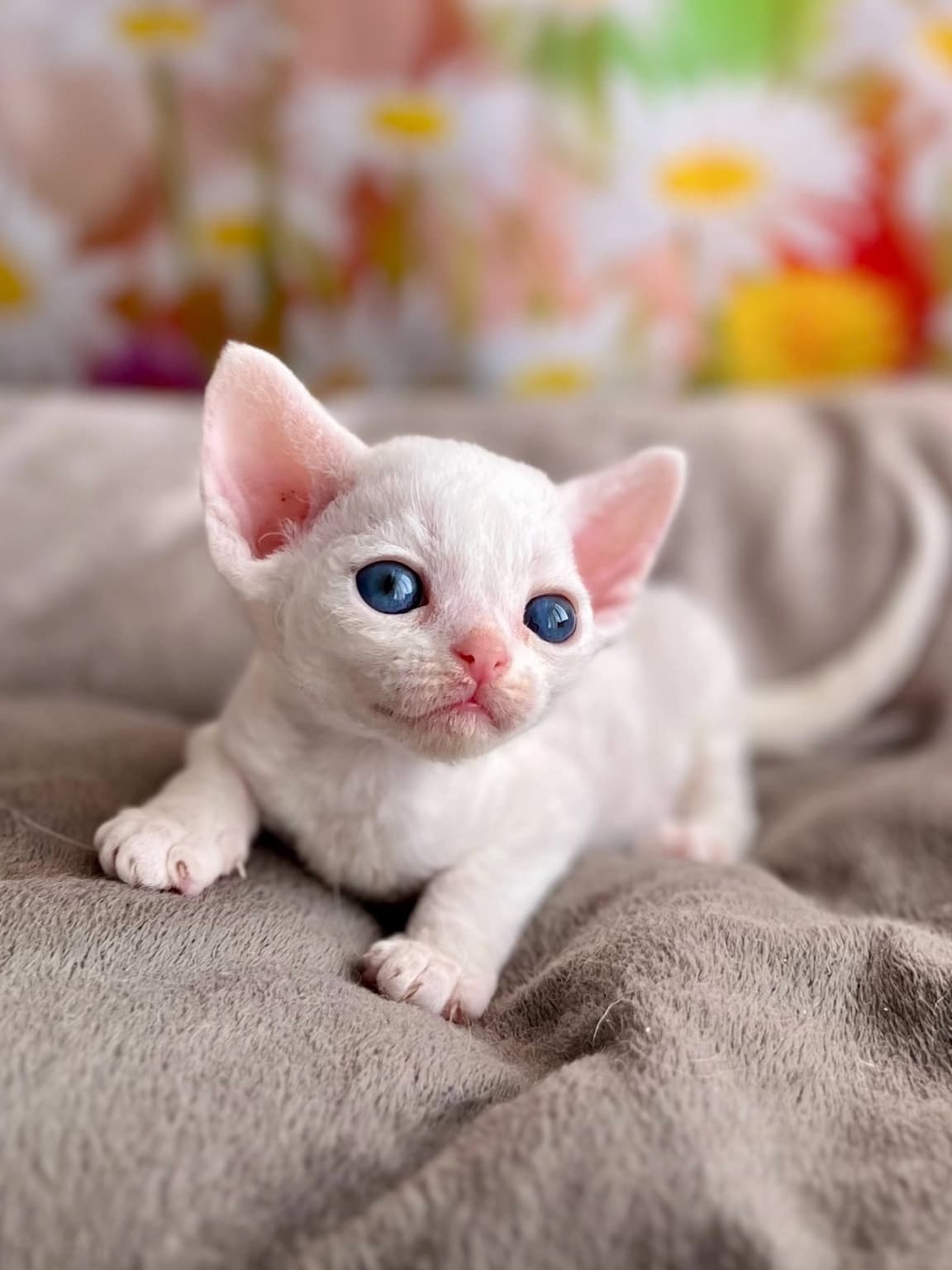
This is an important distinction. When people say Devons are very people-oriented, it is sometimes taken as a promise of a cat you can carry around all day. In my experience those are not the same thing at all. A Devon may dislike being lifted and taken somewhere against their wishes, then come to you voluntarily five minutes later, settle on your chest, climb onto your shoulder or curl up against your side.
They will choose the place themselves. Very often, that place will be you.
If I had to explain the difference between my two breeds very briefly, I would put it this way: both the Selkirk and the Devon are true companions. The Selkirk is more likely to say, ‘I am here, beside you’, while the Devon says, ‘Move over — I am lying directly on you.’
A Selkirk will also take part in everything you do, lie nearby, watch, reach out a paw and ask to be stroked. They simply tend not to lie on a person for long because they become too warm. For a Devon, being nearby somehow is not enough.
Whatever you are doing, you gain a partner. Sorting something out? The Devon comes to sort it too. Open a cupboard? Excellent — they need to be in there. Sit down to work? They must see what is happening. Pick up any object and a paw immediately appears.
Devons have marvellous paws. I call them monkey paws because they are always reaching somewhere: to touch, hook, feel or play. Sometimes merely watching events seems insufficient; a Devon must take part personally.

Then there is the gaze. A Devon’s large, attentive eyes are a story in themselves. They can look at you as though they are trying to understand what is in your heart. I will not claim that they can actually read minds, but that is the impression I have again and again.
To a Devon, a person really matters. Not as staff with a food bowl, or even simply as a source of affection. A Devon needs to be involved and in the middle of events — preferably while touching those events with a monkey paw.
My Devons love to sleep in a heap. They wash one another, cuddle and arrange themselves into incomprehensible constructions of legs, tails and ears. They give the impression of a very close family, although that does not mean eternal peace reigns among them.

We jokingly called Yasya and Luna ‘the divorcées’, for example, because from time to time they remembered some disagreement between them. They would face each other, arch their backs and remain silent for a long, tense moment, sometimes hissing. Then one would reach out a paw very, very slowly and touch the other. The diplomatic crisis usually ended there. They would go their separate ways until next time.
The right person for a Devon Rex is probably someone who wants not merely a cat, but the constant presence of another living being within their life. Someone who is not irritated that everyday activities are now shared: lie down and someone lies on you; sit at the computer and someone arrives to inspect your work; open something and a paw reaches inside.
If you want a more independent cat who spends much of the time somewhere nearby but does not feel obliged to join literally everything, a Devon may be a little… too Devon.
A Devon Rex seems constantly to ask, ‘What are we doing now?’ It is always ‘we’, never ‘you’.
If that ‘we’ does not frighten you, life with a Devon Rex will probably suit you very well.