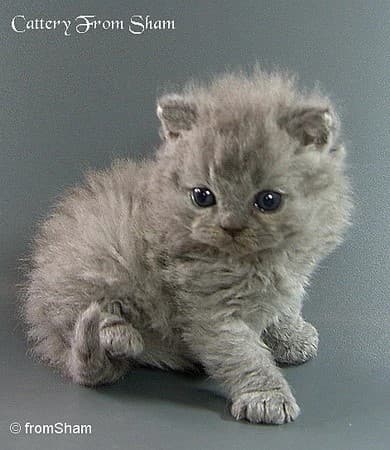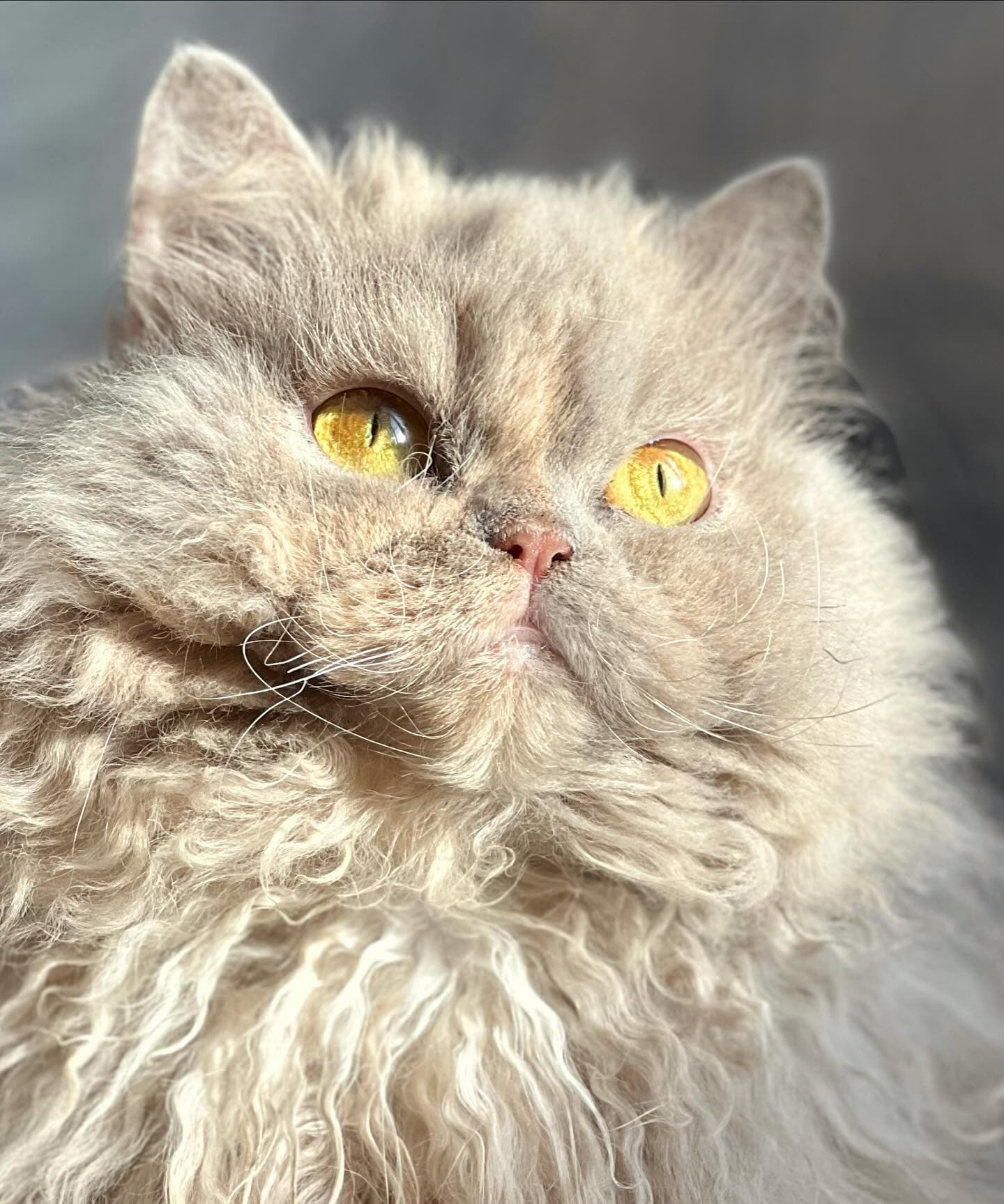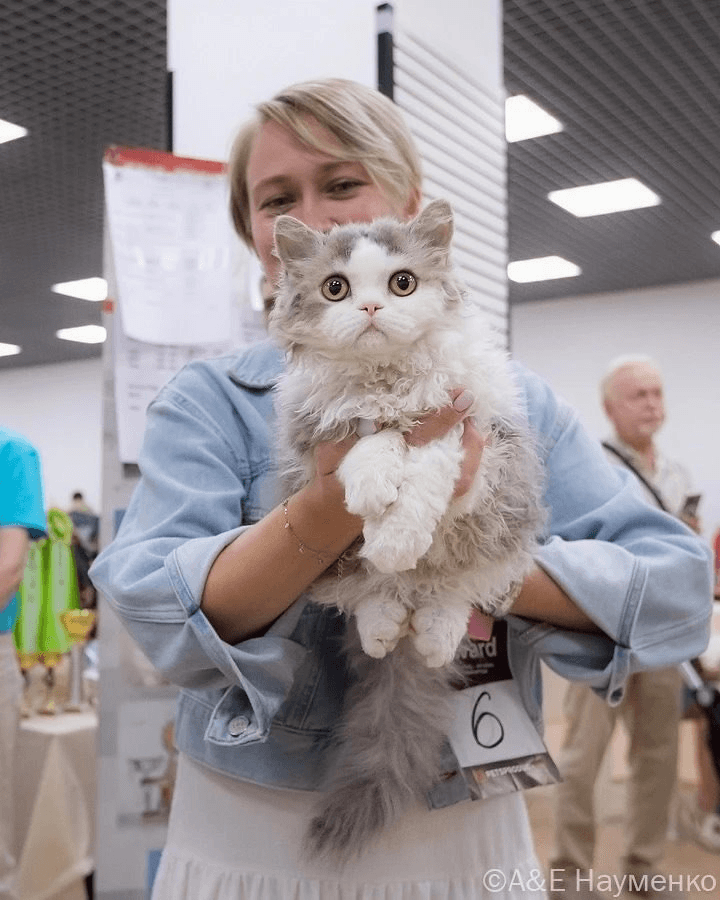
My favourite breed has had a very difficult path in this country. Although the first Selkirks appeared in Russia around twenty years ago, until recently they had not managed to win Russian hearts at all. It would have been one thing if the breed had simply been unpopular with the general public. Not everyone goes to cat shows or knows more than three or four breeds. Yet even breeders themselves would shrug when they heard that someone was buying a Selkirk. ‘Why do you need one? If you want a sweet fluffy cat, get a Persian or an Exotic!’ Those were the sorts of comments I heard from colleagues.
At shows, I quickly learnt to ignore visitors who were not especially tactful. Now, when I hear something such as ‘Oh, the cat has not been washed’ or ‘Someone forgot to brush it’, I simply smile and explain that this is the breed: their coat is curly, and brushing will not make it straight. I lost the urge to prove anything to anyone at all costs a long time ago.
The problem was not merely that the breed was unpopular. People simply did not understand it. They looked at a curly coat and saw an unwashed or unbrushed cat rather than a breed characteristic.
I can understand the breeders, in principle, and non-breeders too. This is not a commercial breed: litters are not very large, and half the kittens are straight-coated, which means that they do not have the breed-defining characteristic. There is not much money to be made. Then the straights need homes as well, and people have no idea what sort of creatures they are, even though they are beautiful, kind, intelligent and so tender that they give you goosebumps. How could they compete with the striking, exotic-looking Bengal or the enormous Maine Coon?
Argo’s Legend Veronica with her owner Elena
Yet the sweet, rounded Selkirks appealed to Scandinavians and other Europeans, as well as to people in China, Korea and Japan. Why them, then, and not us Russians? I thought about this for a long time and can see only one reason: they value the comfortable Selkirk temperament. They want a cat for life, not for showing off. Although the Selkirk has plenty to show off too; after all, a curly cat with an anime-like face does not live in every home.
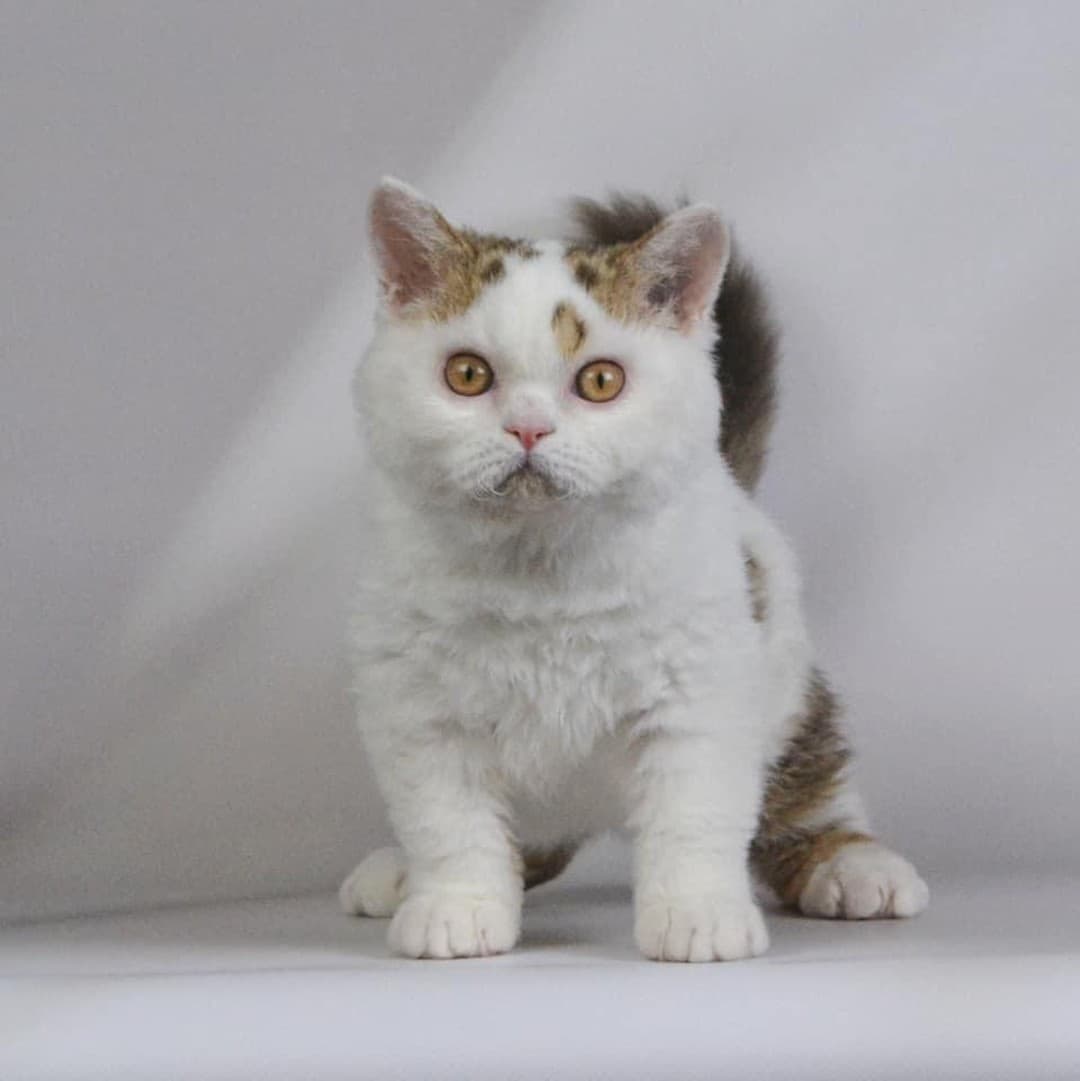
If, for example, the Oriental is grace, agility and wildness — I mean in appearance — the Maine Coon is status, size and ruggedness, and the Burmese is chic and glamour, then a curly cat is sweetness and comfort. Not very Russian, to be honest. Scottish cats, of which there are enormous numbers in this country, are also much more familiar to Russian admirers of cuteness.
Then suddenly a miracle happened: people noticed the Selkirk. Everyone did at once, both enthusiasts and professionals. Do you know why? Videos and photographs of a homozygous kitten living in an Asian country went viral on Instagram. The kitten really is magnificent, covered in tiny curls and with an irresistible little face. And it played a cruel trick on Selkirk breeders. I shall explain why.
To begin with, homozygous kittens are still rare. These representatives of the breed inherited the curly gene from both parents. Breeders themselves may wait years for such kittens. Buyers who rushed to breeders asking, ‘Do you have one like this?’ while showing me that photograph from the banned platform left me personally at a loss. What could I honestly say? Yes, occasionally there is one single kitten; if you want one, you will have to wait. Or look at heterozygous kittens. Their coats may not curl quite so tightly, but believe me, when they grow up they will resemble a fluffy curly cloud rather than losing their coats and showing bald patches. There are also homozygotes that look like heterozygotes, only curlier. Even so, a heterozygous coat is more pleasant and silky to the touch.
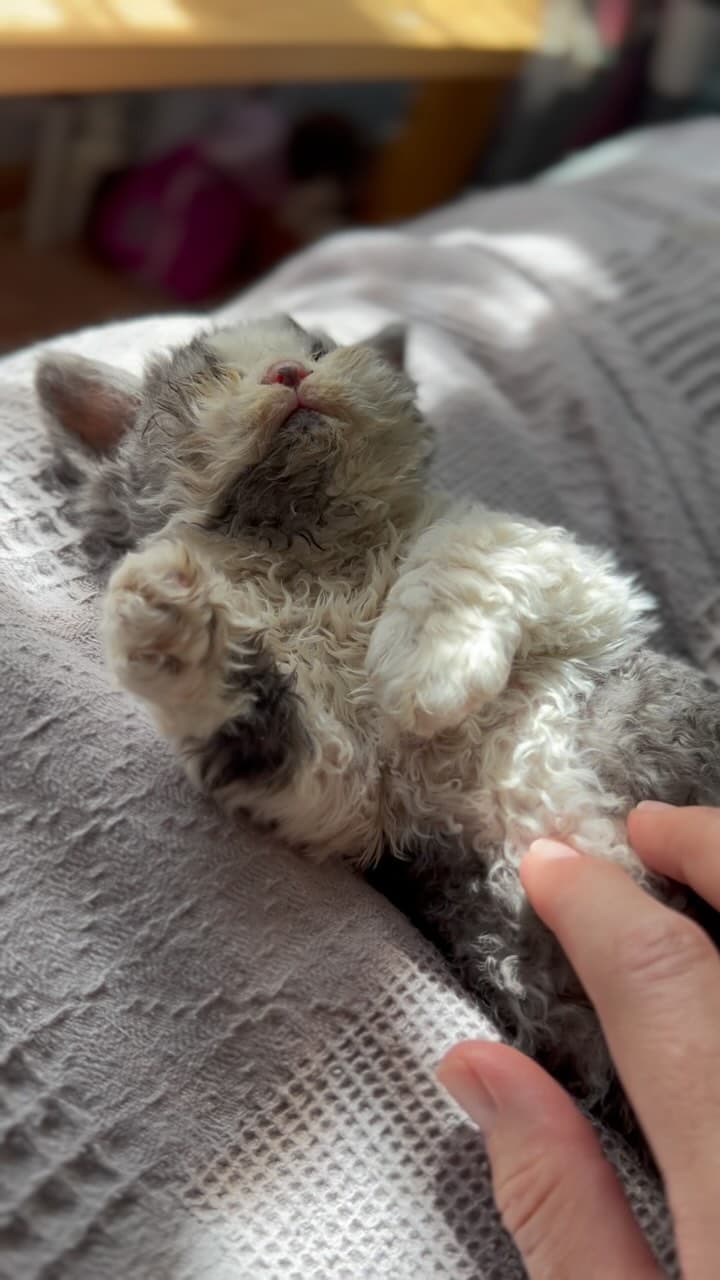
The second thing I dislike is that, at present, both buyers and some show judges are pushing breeders towards producing more homozygous kittens in their litters, which will most likely affect Selkirk type. The buyers simply want them; the judges — not all of them, of course — see a heterozygote as a poor Selkirk because they recently handled a cat with ‘such enormous curls, curled all over’. I believe heterozygotes and homozygotes should be judged with their genetic nature in mind. Otherwise we shall reach a point where there is no reason at all to show a heterozygote. Selkirks have different types of curl; each is beautiful in its own way and has a right to exist.
The Selkirk’s breed-defining features are its coat and curls, that is true. But there are also the features that distinguish a Selkirk from every other curly breed: the head and body. A round head with a short nose and pronounced stop, large round eyes and small ears is, alongside the curls, our calling card. Do you know who has the most beautiful head in a litter? The straight, the straight-coated Selkirk. And the most beautiful, strongest body? The straight again. To produce the greatest possible number of homozygous kittens, we would need homozygote-to-homozygote or homozygote-to-heterozygote matings. If we breeders take that path, we shall lose size, head proportions and coat quality. We shall then be forced to outcross to British Shorthairs and American Shorthairs because there will simply be no straights left. This would most likely set us back years, to the period when the breed was only beginning to take shape.
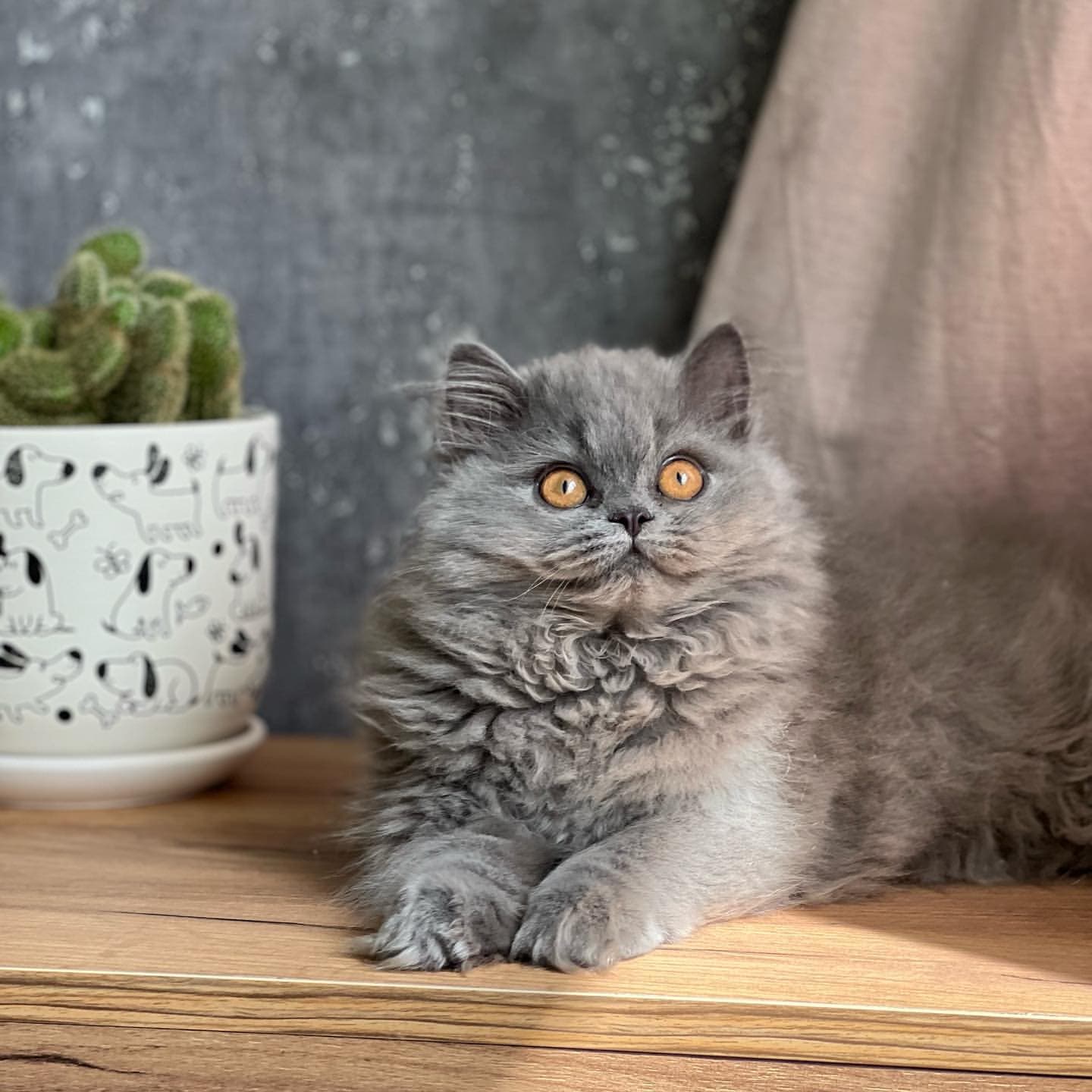
So now, as we stand on the threshold of a new fashion for the breed — something that is, of course, very pleasing for a breeder — I wish both experienced breeders and newcomers the good sense not to lose their heads or chase excessive profit, but to work responsibly and remember that a pedigree animal is not only coat, curl and colour. It is many, many other things as well, including health and temperament.
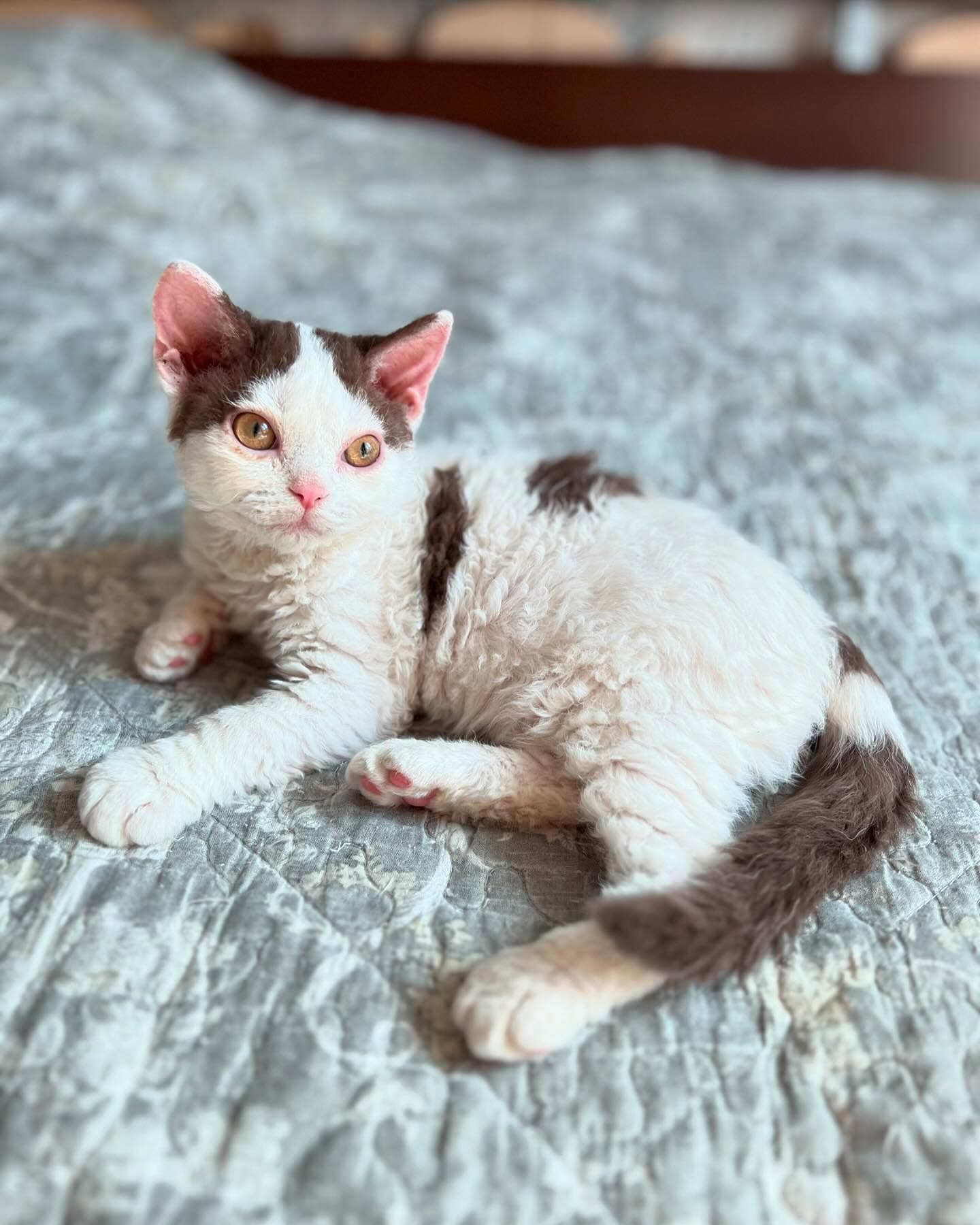
Good luck to everyone, and let the age of the Selkirk begin!
Maria Domashenko