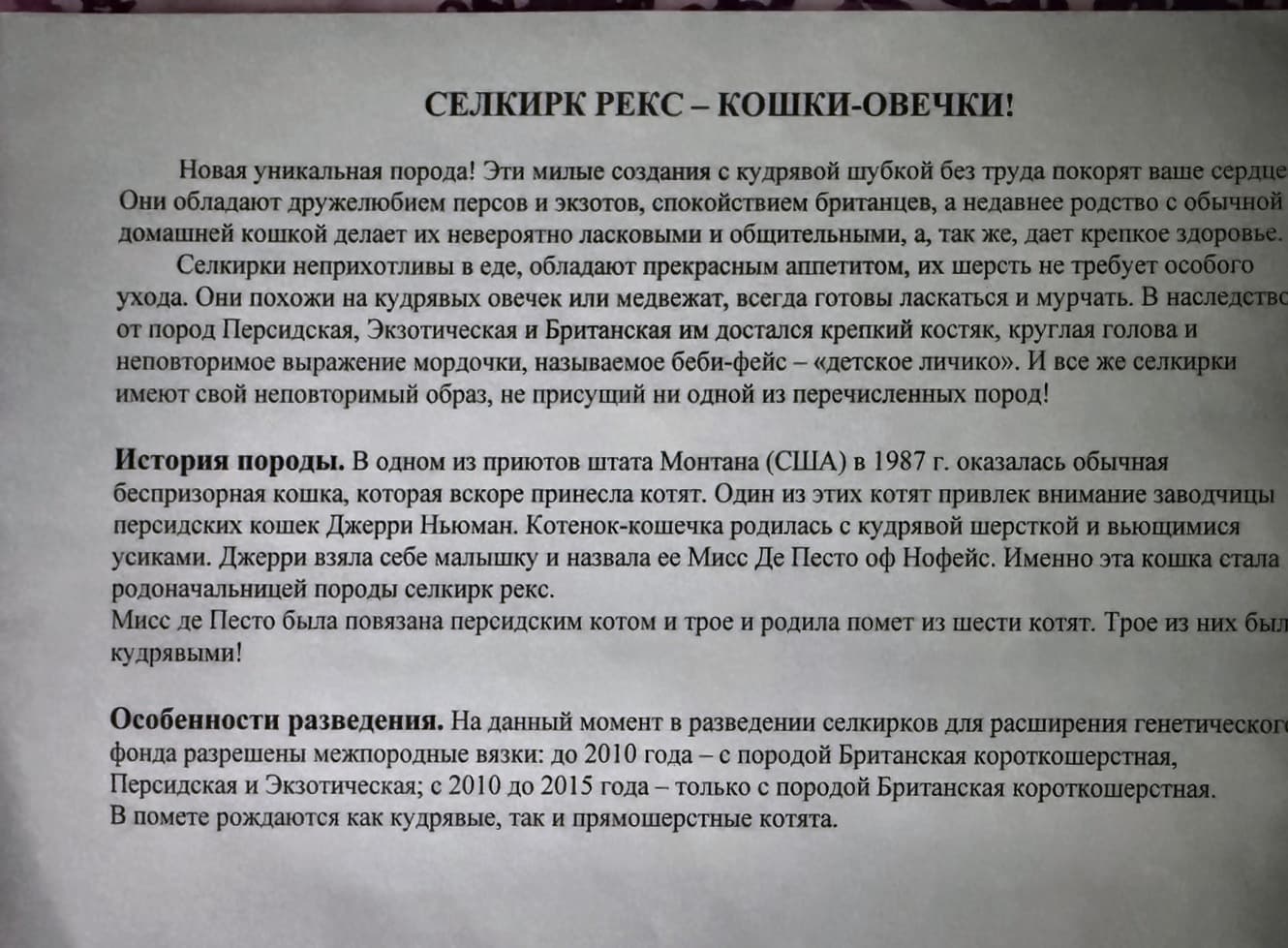
I recently found an old show card of mine about Selkirk Rex cats. Across the top, in large letters, it says: ‘SELKIRK REX — THE SHEEP CATS!’
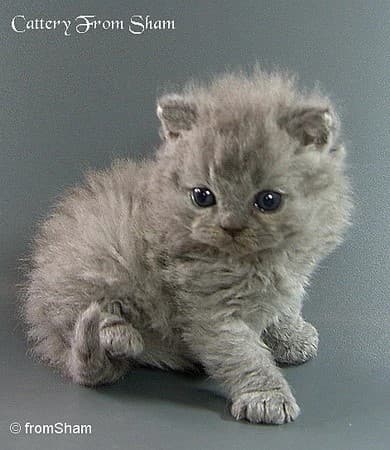
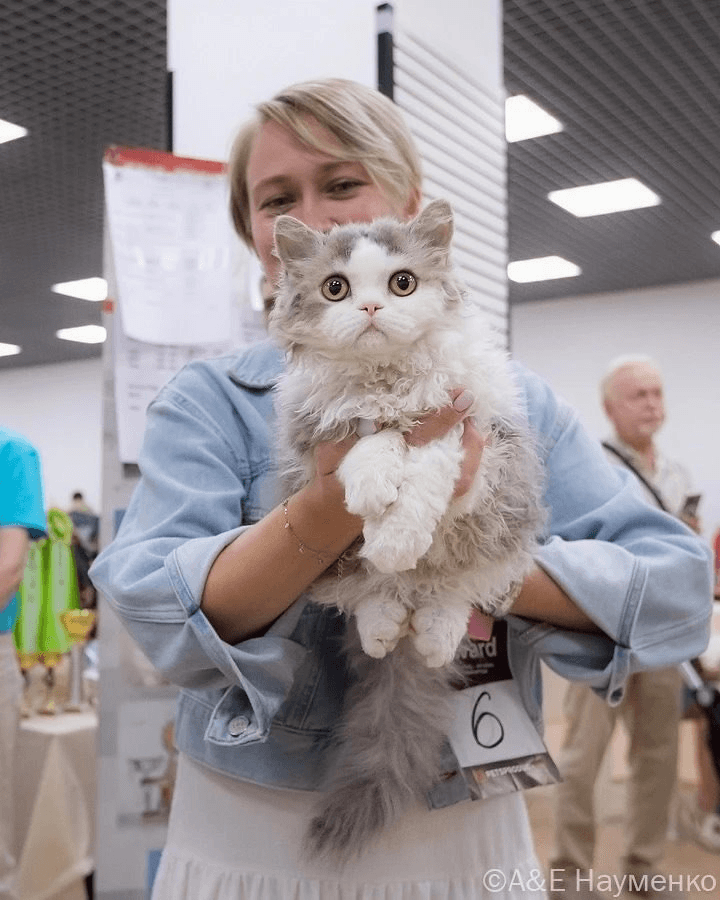
I have not heard anyone call Selkirks that for a very long time. Once, however, the ‘little sheep’ comparison followed the breed everywhere. Old breed threads on forums were titled ‘Selkirk Rex — the curly sheep’, and the comparison was just as familiar at shows. It was probably the simplest way to explain the sight to someone meeting a Selkirk for the first time. The coat falls in waves and ringlets, the whiskers may curl, and a longhaired cat really can resemble a small woolly cloud.
That old name has a personal history for me as well. The image of the ‘sheep cat’ eventually gave rise to the name of my cattery. My first choice was Golden Fleece. It was quite literal: Selkirks were the sheep, and the Golden Fleece was the golden sheepskin for which the Argonauts sailed to Colchis. It turned out that a cattery with that name already existed, so I followed the same mythological thread a little further. The Argonauts sailed for the Golden Fleece aboard the Argo. That is how Argo’s Legend was born. The phrase ‘sheep cats’ has all but disappeared from everyday breed talk, yet in a sense that old sheep remains in my cattery’s name for ever.
The history of the Selkirk Rex is an almost perfect illustration of how new cat breeds sometimes begin. Nobody sat down with a finished plan to create precisely this cat. First, an unusual kitten was simply born.
The breed’s history is usually dated from 1987. In Montana, USA, an unusual curly female kitten appeared; she later became known as Miss DePesto of NoFace. Her coat and curling whiskers set her apart from her littermates. She eventually came to the attention of Jeri Newman, a Persian breeder with an interest in genetics.
The Selkirk was fortunate. The unusual cat did not merely reach someone who liked her curls, but a knowledgeable breeder who tried to understand what she had found. Jeri investigated Miss DePesto’s background, asked about her mother and littermates, planned matings, observed the results and documented her work. We can therefore reconstruct the breed’s earliest steps in considerable detail from Jeri’s own account rather than only from later retellings.
When Miss DePesto matured, Jeri mated her to her black Persian male, Ch. Photo Finish of Deekay. Six kittens were born on 4 July 1988, three of them curly. This was a crucial result: the ratio supported the idea that the new mutation was inherited as a dominant trait. One of the curly kittens was NoFace Oscar Kowalski, who played an important part in the breed’s later development.

From that point, an accidental and unusual mutation became the foundation of a new breed. Persians, Exotics, British Shorthairs and, in the early years, American Shorthairs were used in the breeding programme. The aim was no longer simply to produce curly kittens. Breeders needed to establish a distinctive type of its own: strong bone, a characteristic head and muzzle, good proportions and a quality coat, while preserving what made the first Selkirks special.
Straight-coated kittens had been part of the breed almost from the beginning. In Miss DePesto’s first planned litter, half the kittens were curly and half straight-coated. Homozygous Selkirks, carrying two copies of the variant associated with the curly coat, appeared later, but Selkirk Straights remained an important part of breeding work for a long time. I still find it amusing when someone sees a straight-coated Selkirk for the first time and asks, ‘Why is it a Selkirk, then?’ Because a breed is more than its curls. It also rests on ancestry, type and generations of selection.
The breed gradually gained official recognition. TICA first admitted the Selkirk Rex to its new-breed programme and granted championship status in 1994. CFA began registering Selkirks in 1992 and granted the breed full championship status in 2000.
The origin of the name Selkirk Rex is interesting too. Several explanations, including geographical ones, circulated for years. Modern material from feline organisations states that Jeri Newman used the surname of her stepfather, Selkirk. Thus the Selkirk Rex took its name — a rather unusual instance of a cat breed effectively receiving a human surname.
In Russia in the mid-2000s, Selkirk Rex cats were still very rare. The breed community was small, many people knew one another, and forums became a shared working space. Breeders showed their first litters, discussed shows and breeding cats, tried to tell from a newborn’s whiskers whether it would be curly, debated whether a kitten would mature as longhair or shorthair, and talked about Straights, homozygous cats, grooming and the development of breed type.

There was incomparably less information than there is now. Photographs of interesting cats were genuinely studied, remembered and discussed. Breeders in different cities sometimes followed photographs together to see how the coat of a single kitten changed with age. Looking through those old forums today reveals how lively that world was: people showed newborn kittens, compared lines, argued, made mistakes, changed their minds and gradually built the experience we now take for granted.
As I work through old pedigrees again and try to reconstruct the history of lines that still appear in many of our cats, I appreciate those forum threads even more. At one time the MAU forum became one of the liveliest places for Russian-language discussion of Selkirks, and it was far from exclusively Russian. Breeders from Germany, Ukraine, Latvia and other countries took part. They showed cats and new litters and discussed ancestry, type, coat and breeding decisions. The enthusiasm of Russian breeders was particularly striking. For several years Selkirks seemed to capture everyone’s imagination: new catteries appeared, new cats arrived and lines were established that we still encounter in modern pedigrees almost twenty years later.
Anyone genuinely interested in how Selkirks appeared and developed in Russia should read the old MAU breed threads. Events unfolded there almost in real time. Nearly every strong breeder I met after returning to the breed had read those old discussions. To me, that says a great deal about a person’s relationship with the breed: the threads show not a polished result but the process itself — which cats arrived, which litters were born, what breeders thought at the time, what they argued about, where they were wrong and how their views later changed.
I understood how much that archive still lives only after my own return. Following a long break, I was effectively a newcomer to many of the newer breeders. I brought back one of my old lines and began looking for breeding cats again. That was when I met Nelly Kostyurina from Astrakhan, whom I had not known before, and bought the male Silver from her for my female Nelly — the cat with whom I returned to breeding. Later I acquired another male from Valentina Martazova of the SultanNaf cattery. At some point I discovered that Valya knew me very well — not personally, but from the old MAU breed threads she had once read. It was a rather funny situation: I was meeting a breeder who was new to me, while to her I was not new at all.
Only now, perhaps, do I fully understand that I too became one page in the breed’s history. At the time I was simply living inside it: showing my cats, discussing litters, arguing on the forum, searching for breeding cats and building my lines. So many years have passed that newer breeders now read those old messages as part of Selkirk history. To be honest, I rather like that.
Old photographs can also produce surprises. You look at cats from twenty years ago and realise that some of them were very good indeed. The breed has changed and ideas about desirable type have evolved, but that does not make everything old automatically primitive or uninteresting. Then another kitten is born and you suddenly think: there is Tutti, and there is Amadeus. Many generations have passed, pairings have changed and new blood has entered, yet features of the old cats sometimes appear unexpectedly in their descendants.
The clearest example for me is Nelly. She was the cat I collected from Kirov when, after a long break, I decided to return to breeding. She descended from my old lines and was almost an exact copy of Susy, the female I had brought from Germany many years earlier. Generations, other cats and other matings lay between them, yet when I looked at Nelly I felt that I was seeing Susy again. That is probably why I find old pedigrees and photographs so compelling. They are no longer merely lists of distant names. Sometimes you can quite literally see those cats in the animal sitting before you today.
Much has changed since then. The breed itself has changed, rules in different feline organisations have changed, and breeders’ ideas about type and breeding have changed. When I returned to Selkirks after my break, I found a completely different scene. Many people were new to me, while many of those with whom I had once discussed litters, shows and breeding plans were gone. Some had left the breed, some had stopped breeding and some remained, but communication itself was different. The shared forum community in which everyone talked constantly and watched the breed develop together had almost disappeared. Breeders now mostly work in their own way and communicate through social media, often on Facebook. I remember being surprised and even a little saddened. I had expected to return to the place I had left, only to discover that not just the breed but the whole world around it had changed.
I would write some parts of my old show card very differently today. Yet it captures its period exactly. We really did stand at shows explaining that the cat had, in fact, been washed and groomed: the coat was naturally curly. We explained why both curly and straight-coated kittens could be born in the same litter. We explained that the Selkirk was a breed in its own right, not simply a British cat that had somehow been given a perm.
Today the Selkirk Rex is no longer the almost unknown breed that had to be explained from the beginning. It still matters to remember where it came from. It is especially valuable that the start of the story is so well documented: Jeri Newman did not merely notice an unusual cat, but tried to understand the nature of the new trait, planned the work that followed and recorded the results in detail.
And it all began with one strange curly girl from Montana, whom a breeder once looked at and decided not to pass by.