Lately I have been hearing the same question more and more often: ‘Is this kitten really, really happy to be handled?’
Usually, this does not simply mean an affectionate kitten. People want to be able to pick the kitten up at any moment, carry it around the house, cuddle it and put it on their lap — and for the kitten not merely to tolerate all this, but preferably to be perfectly delighted by it.
I understand where such questions come from. A person is choosing an animal with whom they expect to live for many years and wants to understand whom they are bringing home. That is especially true if they have already had an unpleasant experience, or if they have heard too many stories about hidden diagnoses, unscrupulous breeders and photographs whose editing leaves them only remotely related to the real kitten.
So caution itself does not irritate me in the slightest. It is better to ask.
Yet I increasingly notice the point at which a wish to get to know a kitten begins to turn into an attempt to rule out, in advance, everything that might ever fail to go according to plan.
Will the kitten definitely be affectionate? Will it definitely sit on my lap? Could its temperament change as it grows up? Will it get along with a child and another cat? Will it remain healthy? How long will it live?
At that point, the subject begins to interest me not only as a breeder.
It seems to me that people in the modern world increasingly try to protect themselves not only from real danger, but from the very possibility of future stress. We read reviews, compare terms, insure ourselves, study risks and try to anticipate difficulties. There is nothing wrong with that. The problem begins when we start to feel that sufficiently careful checking will allow us to choose a future in which nothing unpleasant ever happens.
Sometimes we try to apply the same logic to a living creature.
Temperament makes this particularly clear.
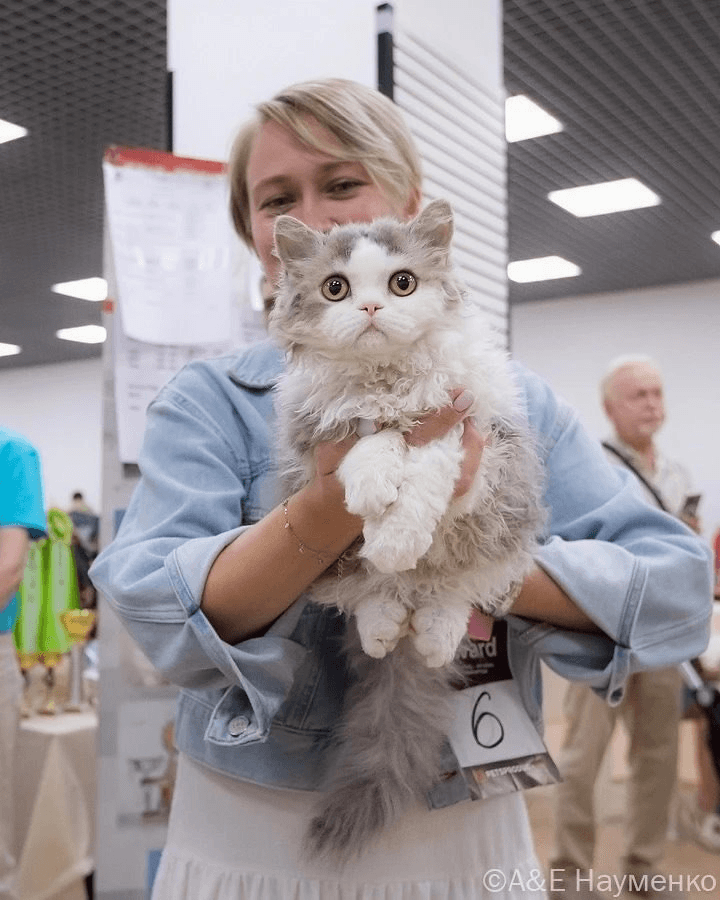
I have had cats that genuinely adored being held. You could carry them around, move them and cuddle them, and they regarded it as perfectly normal. I have also had very affectionate cats that sincerely could not understand why a person had suddenly picked them up and carried them somewhere. Five minutes later, the same cat would come over of its own accord, lie down beside you, climb onto your lap, sleep against your side and demand to be stroked.
Is that cat affectionate? To me, unquestionably. Is it ‘really, really happy to be handled’? That depends on what exactly you mean by those words.
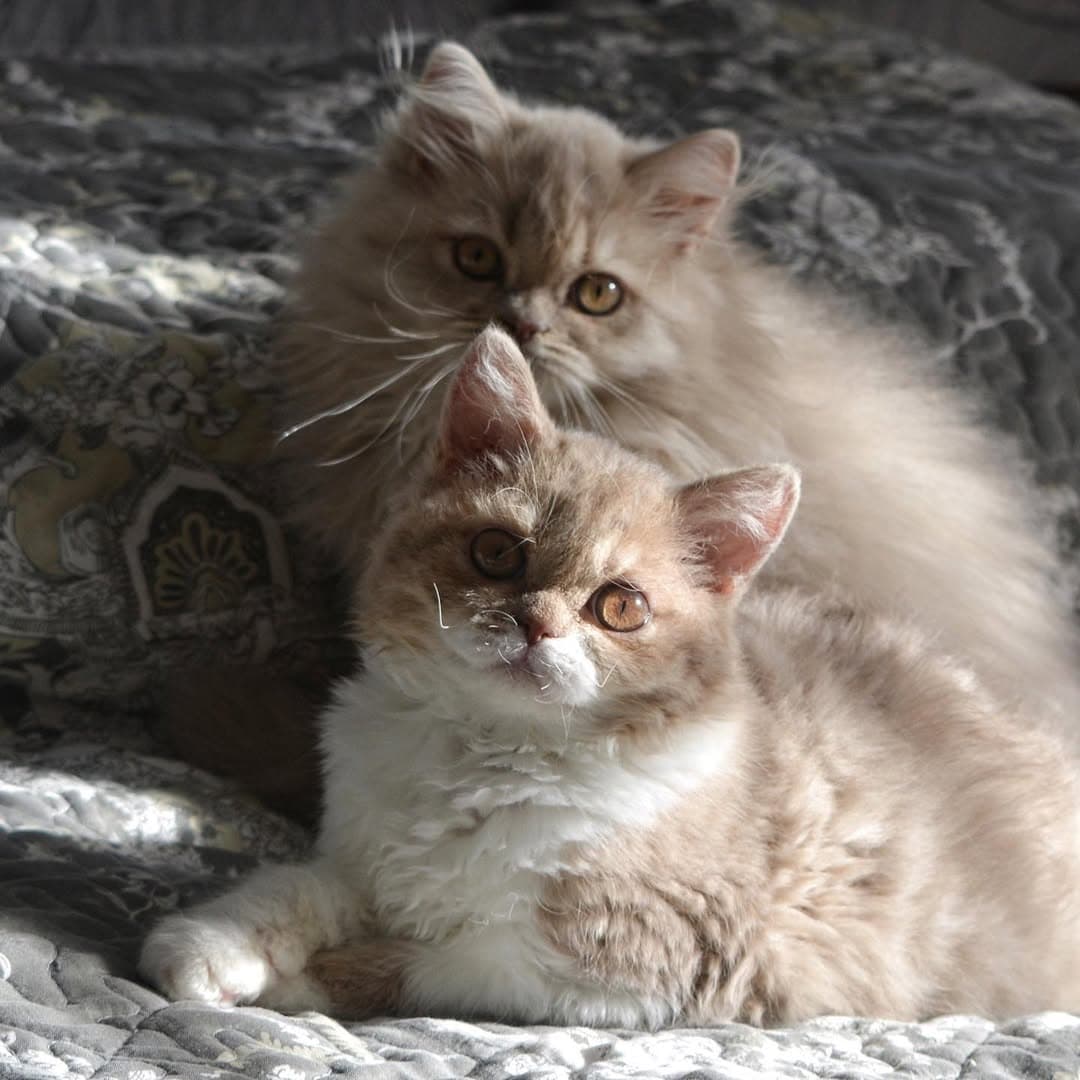
Even kittens from the same litter can be different, although they grew up with the same mother, in the same home and in much the same conditions. A breeder sees those differences: one kitten is the first to come and meet you, while another watches at first; one is calm about almost any handling, while another tells you fairly quickly that it has had enough.
We can and should talk about this. Sometimes I can tell a person myself: no, this particular kitten probably will not suit you; you would do better to look at another.
But describing what a kitten is like now and guaranteeing every last trait of the adult cat’s temperament are not the same thing.
After a move, the home, people, routine and number of animals around the kitten all change. Then the kitten matures and develops its own habits and relationships with its new family. A video in which it sits in the breeder’s arms for ten minutes is useful information, but it is not a prophecy.
In one sense, it resembles trying to predict exactly how your own child will grow up. A child and a cat are entirely different, of course, and I am not trying to equate them. But the boundary between influence and guarantee is similar.
Parents can do a great many things well: choose a good environment, give their child attention, look after their health, provide support and education. All of this genuinely affects the outcome. Yet no one can look at a small child and say with complete certainty what sort of adult they will become.
Their own character, experiences, decisions and circumstances — none of which yet exist — will all come later.
With an animal, matters are simpler, but the principle is the same. A breeder can select parents, monitor the health of their lines, raise a kitten in good conditions, socialise it and observe its temperament. The new owner will then have a very considerable influence too.
Much can be done. What cannot be done is to produce an adult living creature to a technical specification.
Health is much the same. A good breeder should know their lines, test breeding cats, observe relatives, analyse problems that arise and avoid repeating combinations that give cause for concern. All this genuinely reduces risks.
But reducing risk and abolishing biology are different tasks.
You can know how long the parents and grandparents lived. You can see which problems occurred in the line and which have not recurred for many years. But it is impossible to name the age to which this particular kitten will live.
To me, this is where the line lies between making a good choice and trying to obtain a guarantee for the future.
A good choice means asking about the parents’ health, the kitten’s temperament, rearing conditions, documents and breed characteristics. It means telling the breeder about your family, whether you have other animals and what you expect from a cat. After that conversation, it is often genuinely possible to understand quite well whether a particular kitten suits a particular person.
But there are questions to which an honest breeder simply cannot answer, ‘I guarantee it.’
Modern checklists did not appear without reason. People have been deceived too often: diagnoses were concealed, problems were called ‘special characteristics’, and buyers were promised precisely what they wanted to hear. The wish to double-check everything is therefore entirely understandable.
It is simply that, at some point, protection can turn into an attempt to anticipate absolutely everything, and a living creature does not work that way.
You can choose a cattery very carefully and still one day need to treat your cat. You can take the most sociable kitten in the litter and discover a year later that it adores sleeping beside you but cannot bear sitting on your lap. Conversely, a kitten initially thought cautious may become the household’s chief shadow within a month of moving.

There is no contradiction here. What stands before us is not a ready-made temperament in a package, but a living animal.
Perhaps this is no longer only about cats. Life in general responds rather poorly to attempts to make it completely safe and predictable. It brings joy, pleasure and attachment, but it also brings anxiety, disappointment, illness, loss and situations in which we have to worry and make decisions. We can try to reduce risks, create a good environment and think about consequences in advance — all of that is sensible. But we still cannot make this environment completely sterile, so that nothing unpleasant ever happens in it.
Sometimes, I think, the attempt to anticipate absolutely everything prevents us from noticing something quite simple: if something living and truly important enters our lives, then the possibility of worrying about it inevitably arrives alongside the joy. This is not a flaw in the system or a sign that we failed to plan properly. It is simply part of life itself.
That is probably why I increasingly dislike promises such as ‘a perfect temperament’, ‘absolutely problem-free’ or ‘one hundred per cent happy to be handled’. Not because breeders know nothing about their kittens. Quite the opposite: the longer you work with animals, the better you understand where observation ends and guesswork begins.
I can tell you what I see now. I can tell you about the parents and relatives, show you videos, warn you about matters I consider important and help reduce the uncertainty. I cannot remove it entirely.
Choosing a kitten well does not mean searching for an animal with whom nothing unexpected is guaranteed ever to happen. It means choosing a living creature that suits your family, from a breeder whom you can ask sensible questions and receive sensible answers.
After that, life begins anyway. And perhaps that is the only thing that can truly be guaranteed.